


A good pair of pruning shears is the tool you reach for every week of the growing season: deadheading roses, cutting back perennials, snipping herbs for dinner and taking out the crossed branches on a young apple tree. A sharp, well-fitted pair makes clean cuts that heal fast, and a dull or badly sized one crushes stems and tires your hand in ten minutes.
Below are the pruners worth buying, from a Swiss classic built to last decades to a ratchet pair for gardeners with weaker grips, plus a pair of loppers for the branches no hand pruner should tackle. We compared them on the kind of cut they make, how thick a branch they handle, the steel and the parts you can replace, and on what owners report after seasons of use.
 Best overallFelco F2 Classic PrunerCheck price
 Best valueFiskars Bypass Pruning ShearsCheck price
 Best for fruit treesCorona BP 3180D Forged Bypass PrunerCheck price
 Best budget forgedgonicc Professional Titanium Bypass PrunerCheck price

Felco F2 Classic Pruner
For: gardeners with medium to large hands who prune often
- TypeBypass
- CutsUp to 1 in.
- Length9.25 in.
- Made inSwitzerland
The pruner the others are measured against. Felco forges the handles from aluminum and the blade from hardened carbon steel, and every part, from the blade and anvil to the spring and the bolt, can be replaced or resharpened, which is why so many pairs are still in use decades on.
It is sized for medium to large hands. If yours are smaller, the Felco F6 below is the same idea in a smaller frame.
What we like
- Clean cuts on live wood up to 1 inch
- Every part replaceable, lifetime guarantee on the handles
- Angled head is easy on the wrist
Watch out for
- Costs four or five times a budget pair
- Too large for small hands

Fiskars Bypass Pruning Shears
For: deadheading, herbs and everyday trimming on a budget
- TypeBypass
- CutsUp to 5/8 in.
- BladeCoated steel
- WarrantyLifetime
The most-reviewed pruner we found, and the one to buy if you only want one inexpensive pair. Fiskars coats the precision-ground steel blade to cut friction and sap buildup, adds a sap groove, and backs it with a lifetime warranty.
Its 5/8-inch capacity covers flower stems, herbs and soft growth; for older wood on fruit trees, step up to a forged pair.
What we like
- Inexpensive, and easy to replace if lost in the compost
- Coated blade resists sap and rust
- Easy-open safety lock
Watch out for
- Smaller cutting capacity than forged pruners
- Not designed to be taken apart and resharpened like a Felco

Corona BP 3180D Forged Bypass Pruner
For: thicker live wood on fruit trees, roses and shrubs
- TypeBypass
- CutsUp to 1 in.
- BuildForged steel
- GripNon-slip
A full inch of cutting capacity and a forged steel body for about a third of the Felco's price. The bypass blade makes the clean, scissor-like cut that live branches heal from best, and the sap groove and spring keep it opening smoothly through a long session.
It is a solid, heavier tool, a good fit for pruning fruit trees and woody shrubs.
What we like
- 1-inch capacity at a mid-range price
- Forged steel for daily use
- Sap groove and safety lock
Watch out for
- Heavier than aluminum-handled pruners
- Large in small hands

gonicc Professional Titanium Bypass Pruner
For: a sturdy second pair for the shed or the greenhouse
- TypeBypass
- CutsUp to 3/4 in.
- BladeTitanium-coated SK-5
- HandlesAluminum
Drop-forged with an SK-5 steel blade under a titanium coating, aluminum handles and a sap groove, for close to the price of the basic Fiskars. Per the listing it ships with a film of anti-rust oil on the blade, so wipe it before the first cut.
A good choice when you want forged construction without a forged-tool price.
What we like
- 3/4-inch capacity
- Rust-resistant coated blade
- Light aluminum handles
Watch out for
- Not a pruner you rebuild with spare parts
- Blade needs a wipe on arrival
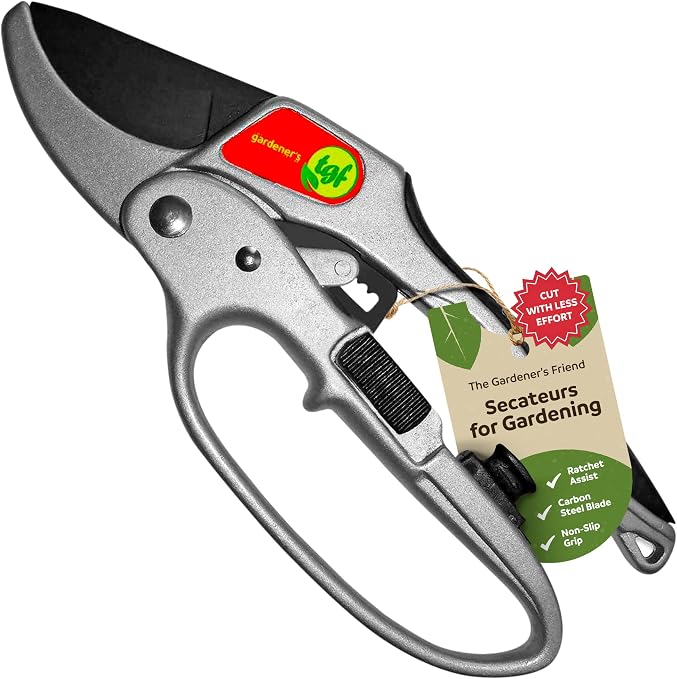
The Gardener's Friend Ratchet Pruning Shears
For: arthritis, sore wrists or anyone who struggles with a normal pruner
- TypeRatchet anvil
- CutsUp to 1 in.*
- BladeManganese steel
- BodyAluminum
A ratchet pruner cuts in stages: squeeze, release and squeeze again, and the mechanism holds the blade's progress between squeezes, so a branch that would be hard work in one stroke takes three easy ones. A neoprene insert on the anvil holds the stem in place while you cut.
*The listing rates it to 1 inch "depending on the wood and your individual strength". As an anvil design it can crush soft green stems, so it is best on dead or woody growth; pair it with a bypass pruner for delicate cuts.
What we like
- Takes the effort out of thicker cuts
- Grippy anvil insert holds the branch
- Light aluminum body
Watch out for
- Anvil blade can crush soft stems
- Slower than a one-stroke pruner

Felco F6 Pruner
For: small to medium hands that find the F2 a stretch
- TypeBypass
- CutsUp to 0.79 in.
- Length7.7 in.
- Weight7.4 oz
Felco's smaller-frame pruner: the same forged aluminum handles, hardened steel blade and fully replaceable parts as the F2, in a 7.7-inch, 7.4-ounce tool sized for smaller hands. The narrow anvil and pointed blade reach into twiggy growth and cut close to the trunk.
If a standard pruner tires your hand because you can't close it comfortably, this is the fix.
What we like
- Sized for small hands
- Every part replaceable
- Wire-cutting notch and sap groove
Watch out for
- Premium price
- Smaller capacity than the F2

Fiskars 28" Bypass Loppers
For: branches too thick for hand pruners, up to about 1.5 inches
- TypeBypass
- CutsUp to 1.5 in.
- Length28 in.
- WarrantyLifetime
When a branch is thicker than your pruner can handle, don't force it: twisting a hand pruner on wood that's too big is how blades spring and wrists hurt. Long handles give loppers the leverage for 1.5-inch branches, and the extra reach gets into the middle of a shrub or the lower limbs of a tree.
Fiskars' 28-inch bypass loppers are the most-reviewed pair we found, light enough to carry around the garden.
What we like
- Leverage for 1.5-inch branches
- Bypass cut for live wood
- Lifetime warranty
Watch out for
- Not for overhead limbs (use a pole pruner)
- Bulky to store
Bypass, anvil or ratchet?
- Bypass pruners work like scissors: two curved blades slide past each other for a clean cut that heals quickly. Choose bypass for anything living, from roses and shrubs to fruit trees. They are the right first pair for almost every gardener.
- Anvil pruners press a straight blade down onto a flat anvil. They take less effort on hard, dry wood, but they can crush soft green stems, so keep them for deadwood and woody cleanup.
- Ratchet pruners are usually anvil pruners with a mechanism that cuts in stages: squeeze, release, squeeze again. They multiply your hand strength and suit gardeners with arthritis or a weak grip, at the cost of speed.
Cutting capacity and when to switch to loppers
Most hand pruners are rated for branches of 5/8 to 1 inch. Treat that number as a maximum, not a target: cutting near the limit strains the pivot, twists the blades apart and makes a ragged cut. For branches thicker than about 3/4 inch, or anything you have to strain at, use loppers, whose long handles give two-handed leverage. For pruning cuts on fruit trees, our guide to pruning fruit trees covers where and when to cut.
Fit, steel and parts
- Fit your hand. Pruners come in sizes, and an opening that is too wide for your hand is tiring and hard to control. Smaller models and those with a rotating handle suit smaller hands; left-handed versions exist from the better makers.
- Blade steel. High-carbon steel takes and holds a keen edge and can be resharpened many times; coated blades (titanium, non-stick) resist sap and rust. A sap groove on the lower blade stops sticky stems from gumming the action.
- Replaceable parts. Premium pruners sell replacement blades, springs and bolts, so one pair can last decades. Budget pairs are usually replaced, not repaired.
Keep them sharp and clean
Wipe sap off after each session, oil the pivot now and then, and touch up the bevel with a small file or sharpener when cuts start to tear. Clean and disinfect the blades between plants when you are cutting out disease. Our guides to sharpening garden tools, cleaning and storing tools and preventing rust cover the details.
How we rate
We score every pick out of 10 on four things, weighted for what matters over a season in a real garden: how well it does the job (40%), meaning a pruner's cut and capacity, a hose's flow and kink resistance, a light's output at the canopy rather than its wattage on the box; build and durability (25%), including materials, warranty and replaceable parts, and what owners report after a season or two outdoors; comfort and ease of use (20%), for small and large hands, on long jobs and for gardeners with sore joints; and value (15%).
We have not tested these products ourselves. We read the manufacturer's specifications and instructions and look for the patterns in verified owners' reviews, both the praise and the recurring complaints. No brand pays for placement, and a commission cannot buy a higher rating. When a pick changes, we will say so on this page.
Frequently asked questions
What is the difference between bypass and anvil pruners?
Bypass pruners cut like scissors and leave a clean cut on living stems. Anvil pruners crush a blade against a flat surface, which takes less effort on dead, dry wood but can damage green growth.
What size branch can pruning shears cut?
Most are rated for 5/8 to 1 inch. For anything over about 3/4 inch, or any cut you have to force, switch to loppers or a pruning saw.
Are ratchet pruners good for arthritis?
They are designed for it: the ratchet completes a cut in several small squeezes, so each one takes less grip strength. They are slower than a standard pair.
How often should I sharpen pruning shears?
Whenever cuts start to tear or crush rather than slice, which for regular use is a light touch-up every few weeks of the season. A few strokes on the beveled edge with a fine file or sharpener is enough.


